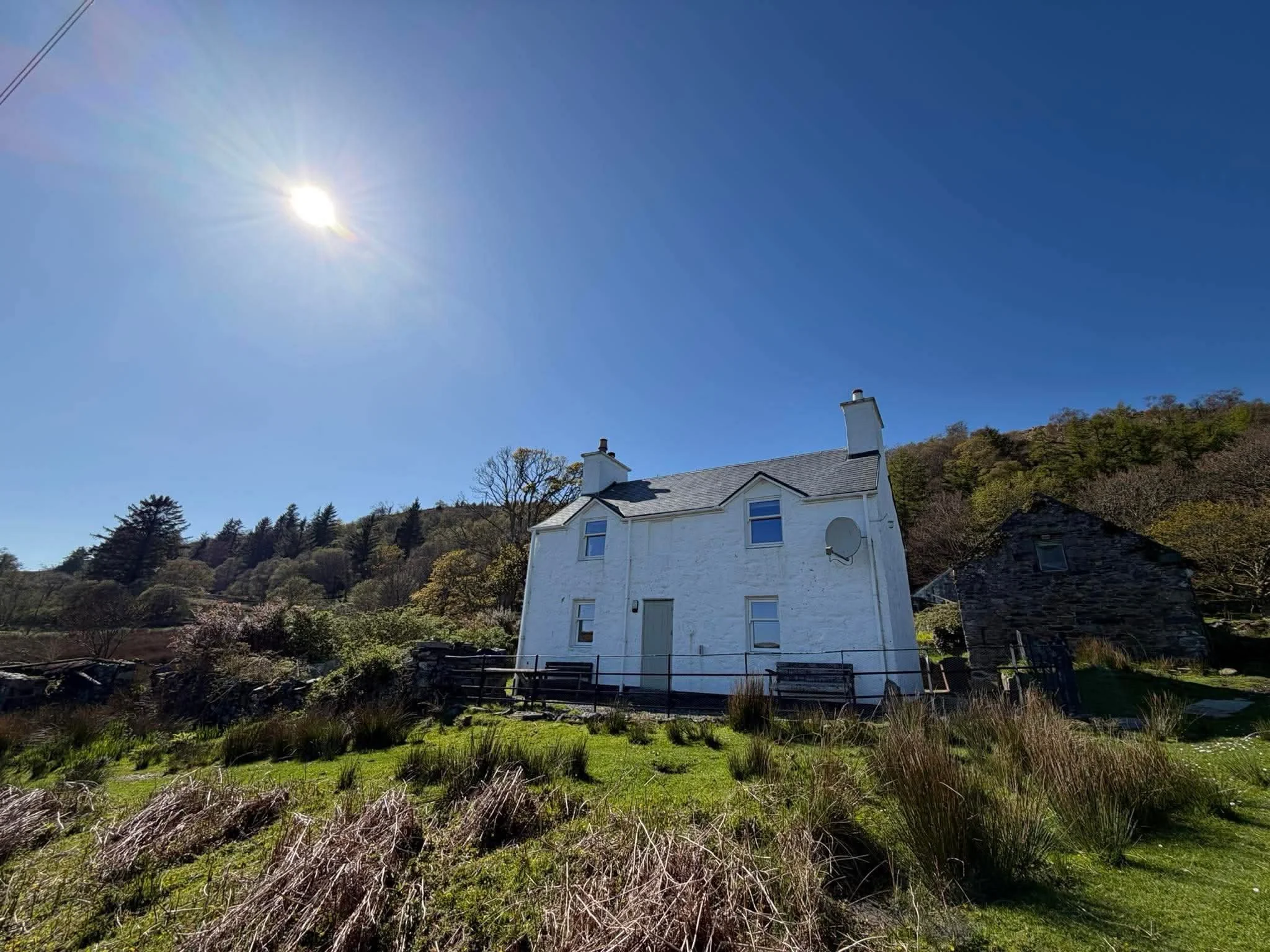
The Old Post Office is more than a holiday home with a beautiful view.
It is part of the working history of Lagg, one of the old crossing places of Jura, where the island met the sea, the mainland, the mail route, and the cattle road.
Set above Lagg Bay, looking out across the Sound of Jura, the house sits in a landscape that was once much busier than it appears today. Visitors now come here for quiet, wildlife, sea air, and open space, but for generations this corner of Jura was a place of movement. Boats came and went. Mail entered and left the island. Cattle were gathered and ferried across the Sound. Families lived by the rhythms of weather, tide, farming, transport, and the long road south to Feolin and Craighouse.
The Old Post Office carries that story in its name.
The Lindsay Connection
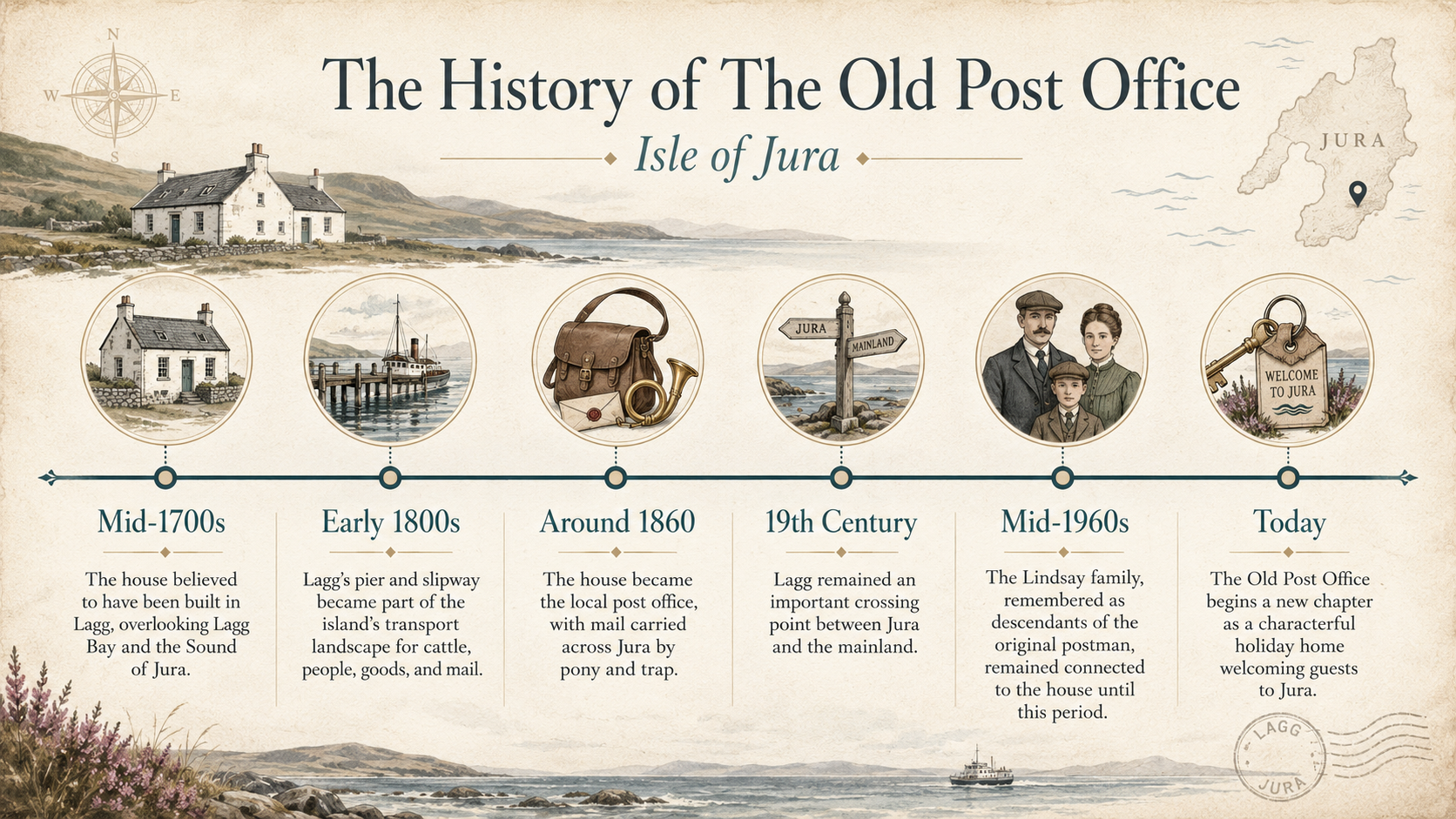
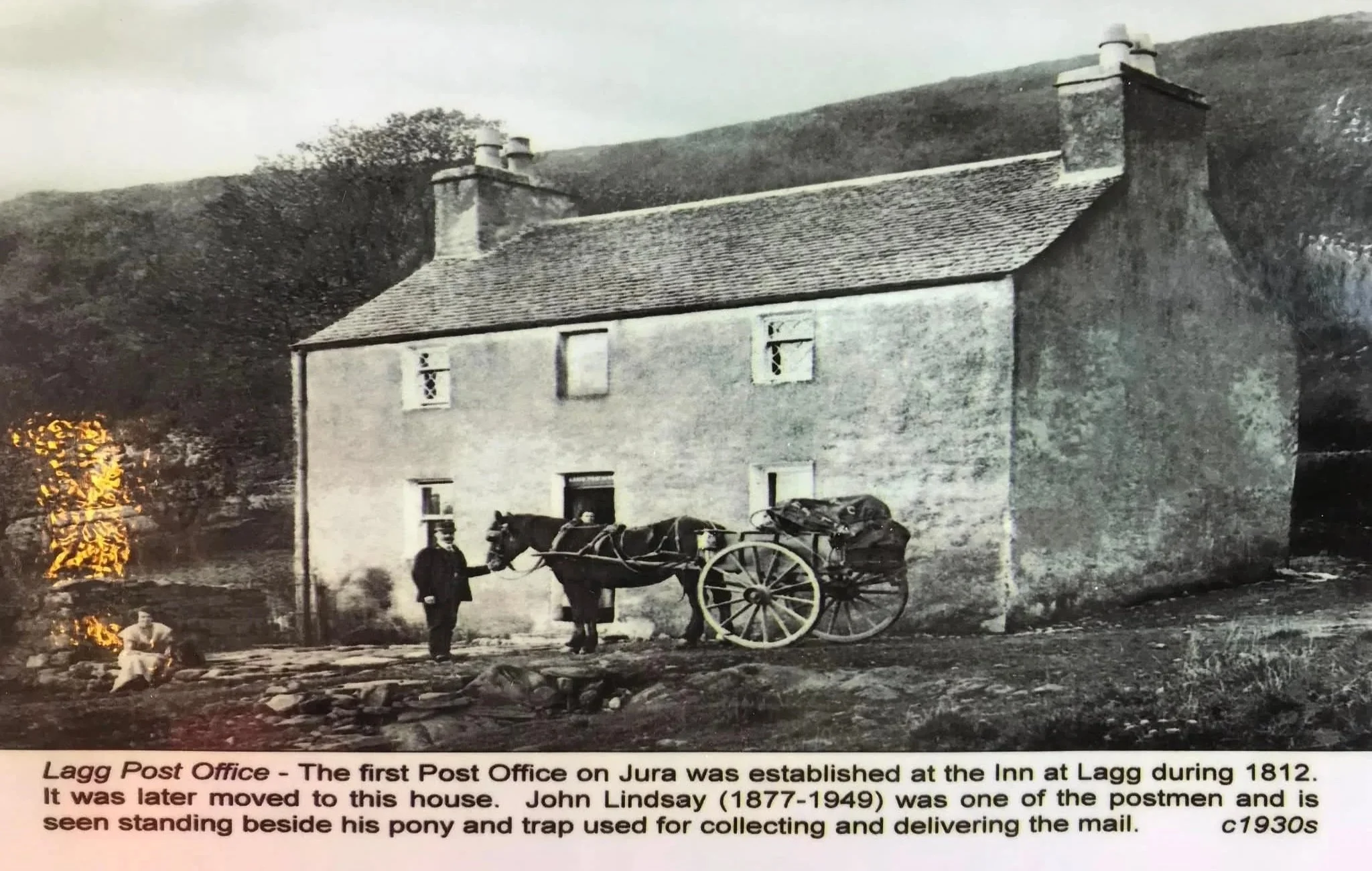
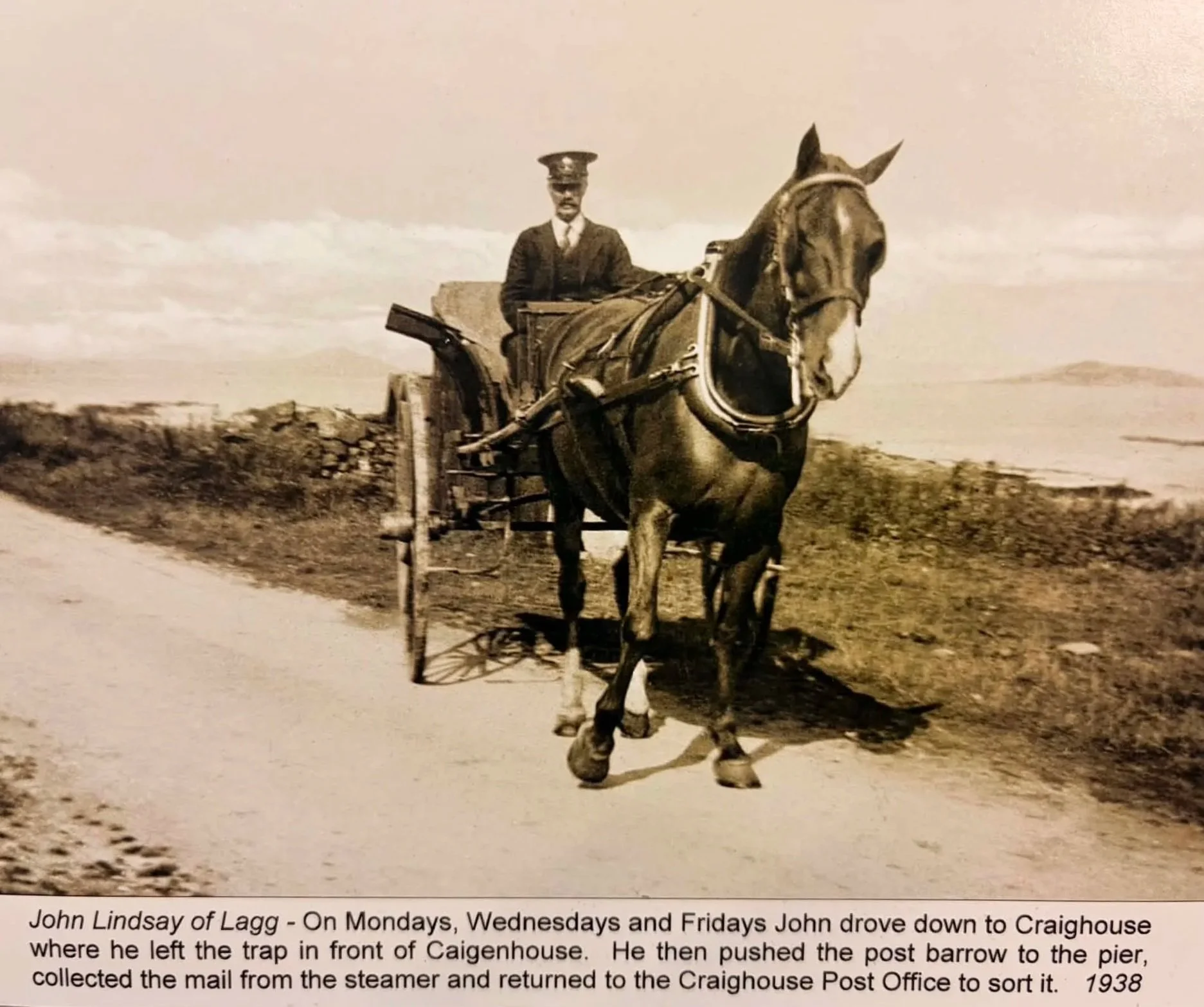
One of the most interesting threads in the story of The Old Post Office is its association with the Lindsay family of Lagg. Publicly available property history records state that the house was home to the Lindsay family until the mid-1960s and describe them as descendants of the original postman.
The Lindsays of Lagg appear in local and family-history accounts as a seafaring and working island family, closely tied to the ferrying of cattle, people, and mail. Genealogical sources connect generations of Lindsays with Lagg and Jura, and local stories remember them as part of the maritime life of the bay.
One particularly colourful story tells of Archibald Lindsay, born at Lagg in 1818, who is said to have taken part in a rowing race across the Sound of Jura in 1843. The prize was not money, but the right to be the first to ask for the hand of Effie McGilp. According to the family story, Archibald won the race, Effie accepted, and they married the following year. It is the kind of story that belongs to a place like Lagg: practical, romantic, weather-beaten, and inseparable from the sea.
Like many family stories, it should be treated as tradition rather than official proof unless checked against primary records. But it captures something true about Lagg’s past. This was a place where rowing, ferrying, carrying, farming, and weather were part of daily life. The people who lived here had to be strong, adaptable, and connected to the water.
Lagg Before the Quiet
Today, Lagg is a small and peaceful hamlet on Jura’s eastern coast. It feels remote in the best possible way: a place of sheltered water, hillside, deer, birds, and changing light over the Sound. But Lagg was once a much more active settlement. Local histories describe it as having had crofts, a school, an inn, and a post office, with a community far larger than the handful of houses that remain in the glen today.
Its importance came from geography. Lagg faces across the Sound of Jura toward Knapdale on the Scottish mainland. Before modern ferry routes and improved roads changed island travel, this was one of the practical crossing points between Jura and the mainland. People, supplies, mail, and livestock moved through this small bay.
That older world is still visible if you know where to look. Below the house, near the water, stand the remains and working traces of Lagg’s old maritime importance: the pier, slipway, and shore that once served as a link between island and mainland.
The Cattle Road, the Pier, and the Mail
In the 18th and 19th centuries, Jura’s roads, ferries, and small landing places were part of a wider west-coast transport network. Cattle from Jura, Islay, and nearby islands were driven overland and ferried onward to mainland markets. The road through Jura was not merely scenic; it was part of a practical route built around the movement of animals, goods, and people.
Lagg was one of the key points in that system. Cattle could be driven across the island and then ferried from Lagg over the Sound to Keills or Knapdale. Local accounts also describe Lagg as the place where mail entered and left Jura. In that sense, the post office was not just a village convenience. It stood at a communications point for the island.
The pier and slipway at Lagg are often associated with the great Scottish civil engineer Thomas Telford, whose work transformed roads, harbours, bridges, and transport across the Highlands and Islands. Whether approached as engineering history, island history, or simply a place to pause on a walk, the old pier remains one of Lagg’s most evocative survivals: a reminder that this quiet bay was once a working threshold between Jura and the wider world.
The House and Its Name
The Old Post Office is understood to date from the mid-1700s, making it one of the older domestic buildings associated with Lagg’s historic settlement. By the 19th century, it had become part of the island’s postal story. Local property history records that the building became the post office around 1860, at a time when post was still carried by pony and trap between Lagg, Feolin, and the wider ferry network.
That detail gives the house a vivid human scale. It is easy to imagine the arrival of letters, parcels, news, and instructions from beyond the island; the dependence on weather and ferry times; the practical importance of a household that connected scattered homes, crofts, estates, and families to the mainland. For a remote island community, the post office was not simply a service. It was a link to relatives, markets, official business, newspapers, and the changing world beyond Jura.
The name has survived because the role mattered.
A Changing Island
Over time, Jura changed. Old ferry routes gave way to newer ones. The centre of island life shifted more toward Craighouse. Population declined, crofts disappeared or consolidated, and places that had once been busy with work became quiet. Lagg, once known for its ferry, inn, school, and post office, became the peaceful settlement visitors see today.
But the landscape did not lose its memory. The road still runs through the glen. The pier still faces the mainland. The bay still holds the light. Deer still move through the fields, and birds still cross the sky above the Sound. The Old Post Office remained, carrying its layered identity: a mid-18th-century island house, a former postal point, a family home, a place connected to the Lindsay story, and a witness to Lagg’s shift from working crossing-place to quiet refuge.
The House Today
In 2026, The Old Post Office began a new chapter when it was purchased by Elizabeth Clark McCormack, bringing together the house’s long history with a deeply personal family story.
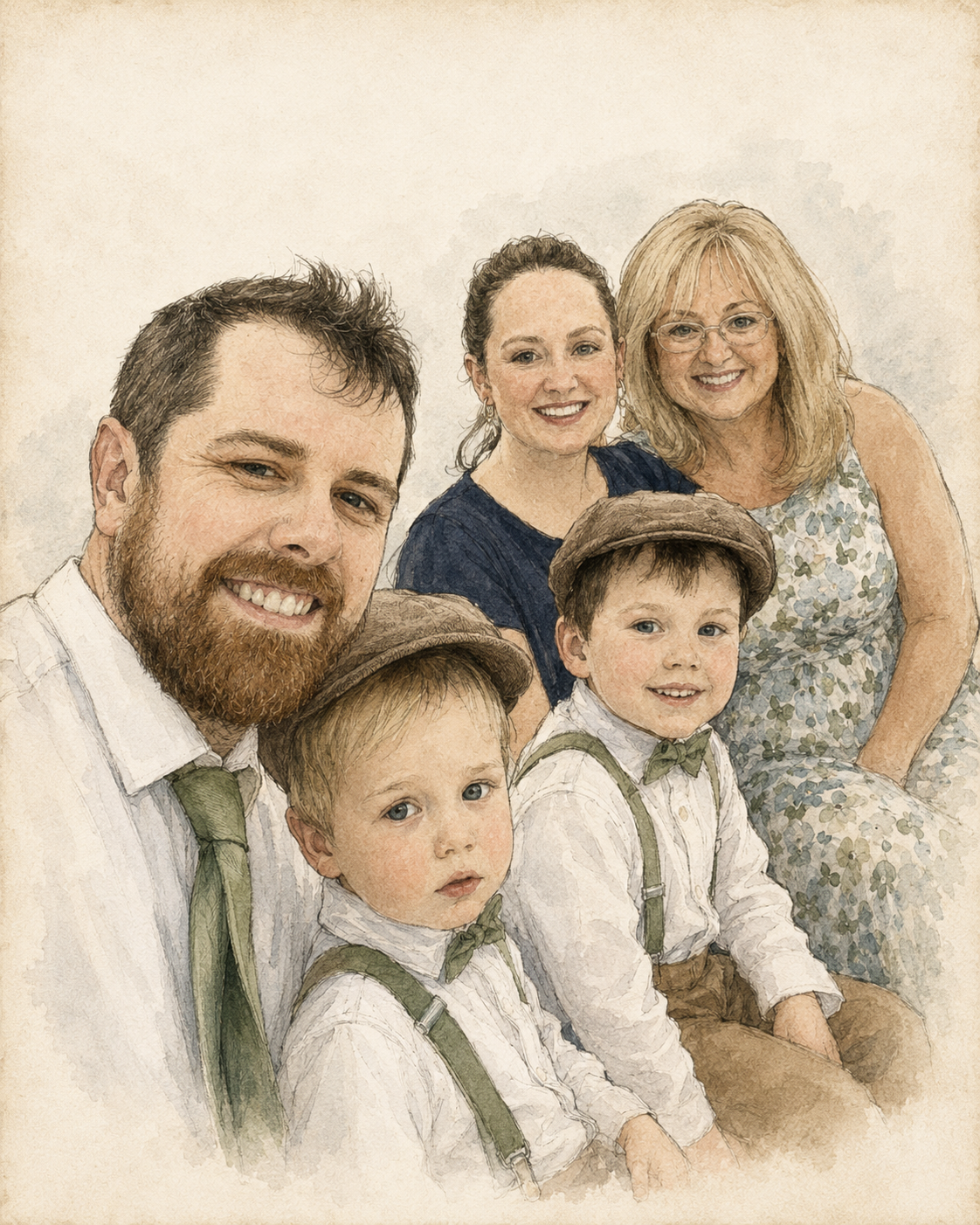
For Elizabeth, the connection to Jura reaches back across generations. Her Clark ancestors left the island for North Carolina in the 18th century, carrying Jura’s memory across the Atlantic. Many years later, when Elizabeth returned to walk in the footsteps of her forebears, the island offered an unexpected full-circle moment: her daughter Jane met and married Cameron Lindsay, whose own family is directly connected to The Old Post Office and to Jura’s postal history.
Cameron is the son of Graeme and Alison Lindsay, long-time residents of Jura. Graeme, a retired RAF Officer, continues the family tradition today as Jura’s postman — carrying letters, news, and connection across the island just as earlier generations of Lindsays did before him. The Old Post Office was long associated with the Lindsay family, descendants of the original postman, John Lindsay, and its return to the wider Clark-Lindsay-McCormack family gives the house a rare continuity between past and present.
Today, the house has been fully refurbished while preserving the character that makes it so special: white-harled stone walls, stripped timber doors with Suffolk latches, exposed beams, lattice windows, log burners, slate paths, mature gardens, and the warmth of the Aga in the kitchen. From the raised gravel terrace, guests can look out across Lagg Bay and the Sound of Jura, watching the same shifting skies, grazing deer, seabirds, and coastal light that generations before them would have known.
The Old Post Office is now a welcoming holiday home, but it remains much more than that. It is a house shaped by island work, family memory, mail routes, cattle roads, and the long relationship between Lagg and the sea. To stay here is to become part of its continuing story — whether you come to climb the Paps, explore the coastline, watch for otters and eagles, visit the distillery, or simply sit by the fire and let Jura’s quiet settle around you.
Guests are warmly invited to make themselves at home, add their own stories to the guest book, and enjoy this timeless corner of Jura with the same care and affection that has carried the house through generations.